
Blog · 24 November 2026
Light in the staircase: handrails, treads and glass that glow
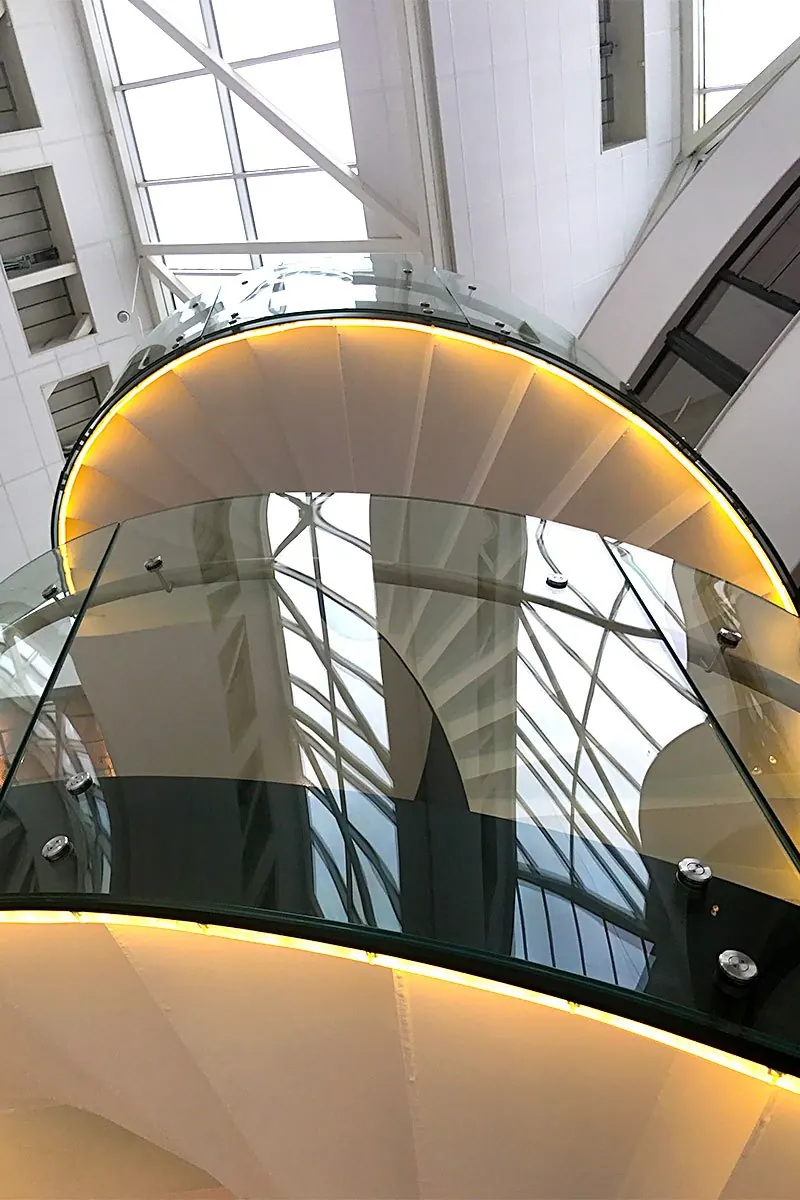
When Livingetc listed its staircase trends, better stair lighting came first. It matches what we are asked for: on most feature stairs we now build, light is part of the stair itself and not a fitting on the ceiling above it.
Four places for light
Under the handrail. A slim LED line in a groove on the underside of the handrail washes the treads with light and shows the curve of the stair after dark. It works in oak as well as in steel, as long as the groove and the cable path are part of the handrail drawing.
Under the treads. A line below each nosing makes the steps read clearly and gives a floating effect on open-riser stairs. It needs a small recess in every tread and a cable route through the stringer.
Along the base of the balustrade or the edge of the soffit. On a closed helical stair a continuous line here draws the whole ribbon in light. It is the most architectural of the four and the least visible as a fitting.
In the glass. Laminated glass lit from its edge glows across the whole pane. On a glass staircase we built in Örebro the balustrades are clear by day and luminous at night.
Plan it before the steel is cut
Light added afterwards means surface cables and visible profiles. Light planned in the engineering stage disappears into the stair. We need to know three things: where the lines run, where the drivers sit, and how someone reaches them in ten years.
Drivers and connections must stay accessible, usually in a ceiling void or a service cupboard close to the stair and not inside a welded box. LED strips sit in aluminium channels that carry the heat away and let a strip be replaced without dismantling anything.
Indirect, warm and dimmable
Nobody should look straight into a light source on a stair. Every line should be hidden from the eye going up as well as coming down, which is checked in the 3D model. Warm white between 2,700 and 3,000 K flatters timber and painted steel, and a dimmer lets the stair be a quiet glow in the evening.
Decorative light is not safety light
Built-in lines make a stair easier to read, but they do not replace the general and emergency lighting that building regulations require on an escape route. Those are designed by the electrical consultant. Our job is to make sure the two work together.
What it costs
Planned from the start, light adds little: grooves, channels and a few hours of coordination. Retrofitted, it can cost more than the handrail it sits in. If there is any chance you will want light in the stair, say so with the first sketch.
Sources: Livingetc: staircase trends